Infrastructure development plays a major role in supporting economic progress, transportation efficiency, urban expansion, and public services. Roads, bridges, airports, drainage systems, utilities, rail networks, and commercial facilities all depend on large-scale construction operations that require powerful and dependable machinery. Without reliable access to heavy equipment, Many infrastructure projects would face delays, increased costs, and operational challenges that slow long-term development.
A reliable Volvo equipment dealer in Fredericksburg often plays an important role in helping contractors manage changing machinery needs across active job sites.
Infrastructure Projects Require Continuous Equipment Operation
Large infrastructure developments often involve multiple construction phases happening simultaneously across wide areas. Excavation, grading, lifting, paving, demolition, and material transportation all depend on heavy machinery working consistently throughout the project cycle.
If important equipment becomes unavailable, connected operations may slow down or stop entirely. Delays in one phase can affect labor schedules, inspections, material deliveries, and subcontractor coordination across the entire project.
Reliable access to machinery helps construction teams maintain a steady workflow and keep infrastructure projects on schedule.

Growing Cities Increase Construction Demands
Urban growth continues creating higher demand for transportation systems, public utilities, commercial development, and residential expansion. As populations increase, governments and private developers must invest in new infrastructure capable of supporting expanding communities.
Heavy machinery allows contractors to complete large-scale earthmoving, road construction, drainage installation, and structural development more efficiently than manual methods alone. Reliable equipment access helps businesses respond faster to increasing infrastructure demands.
Efficient construction operations support faster urban development and improved public services for growing regions.
Reliable Equipment Helps Improve Project Efficiency
Infrastructure projects often operate under strict deadlines and complex logistical requirements. Contractors managing highways, utility systems, bridges, or industrial facilities must coordinate labor, materials, engineering plans, and machinery carefully to maintain productivity.
Reliable heavy equipment improves operational efficiency by allowing crews to complete demanding tasks consistently without unnecessary interruptions. Well-maintained machinery also reduces the likelihood of breakdowns that may disrupt project schedules.
Strong equipment reliability supports smoother coordination across different phases of construction work.
Transportation Networks Depend On Construction Progress
Modern transportation systems require ongoing infrastructure investment to support economic activity and population movement. Roads, bridges, ports, airports, and rail systems all require regular construction, expansion, and maintenance work.
Heavy machinery plays a critical role in these projects by helping contractors manage excavation, lifting, grading, paving, and material handling tasks more effectively. Reliable equipment access ensures transportation projects can continue progressing without major operational delays.
Improved transportation infrastructure benefits businesses, public services, and local economies alike.
Flexible Machinery Access Supports Large Projects
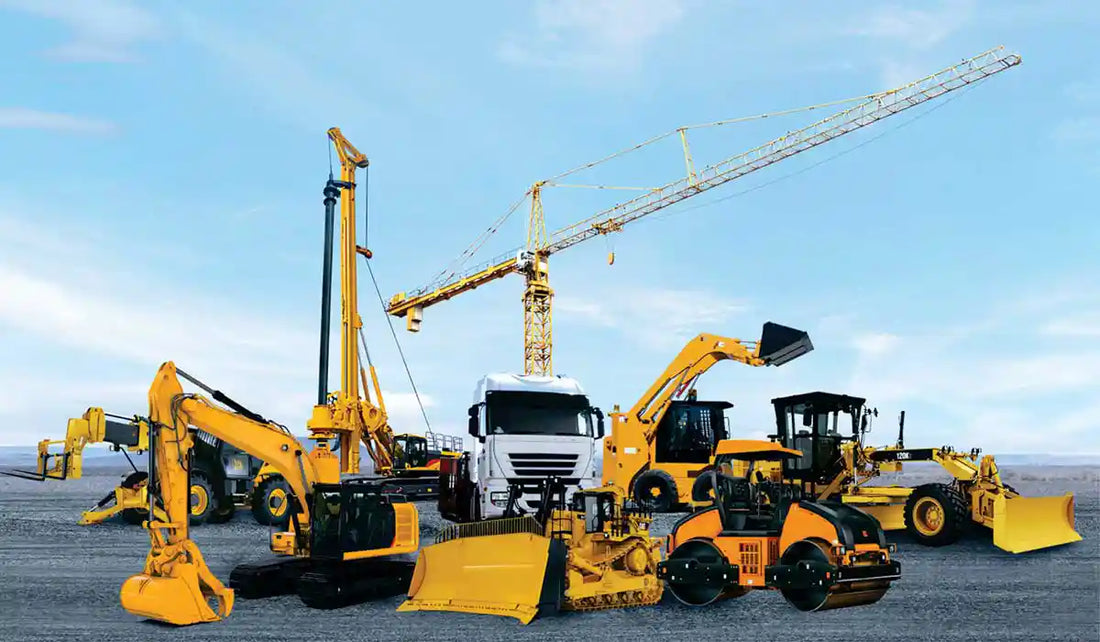
Infrastructure projects may require different types of equipment during various construction stages. Excavators, cranes, loaders, compactors, and paving machinery may all be needed at different times depending on site conditions and project scope.
Flexible machinery access allows contractors to secure the equipment necessary for each stage without major operational delays. Rental solutions and strong supplier support also help companies respond quickly when additional equipment becomes necessary unexpectedly.
Operational flexibility improves project planning and helps contractors adapt to changing construction demands more efficiently.
Infrastructure Growth Supports Economic Development
Infrastructure projects contribute directly to economic growth by creating jobs, improving transportation efficiency, supporting commercial expansion, and strengthening public services. Reliable heavy machinery access helps accelerate these benefits by improving construction speed and operational stability.
Faster project completion allows communities to benefit sooner from upgraded transportation systems, industrial facilities, and public infrastructure improvements. Construction activity also supports employment opportunities across multiple industries connected to development work.
Reliable equipment availability, therefore, influences both construction productivity and broader economic progress.
Modern Machinery Technology Improves Construction Quality
Heavy machinery technology has advanced significantly in recent years. Many modern machines now include GPS systems, digital controls, automated functions, and fuel-efficient designs that improve construction precision and operational performance.
Reliable access to updated machinery allows contractors to complete infrastructure projects with greater accuracy and efficiency. Advanced technology also supports safer operations and improved long-term project quality.
Technology-driven equipment solutions are becoming increasingly important for managing modern infrastructure demands successfully.
Equipment Support Helps Reduce Operational Risks
Infrastructure projects often involve large financial investments and strict regulatory requirements. Delays caused by equipment shortages or breakdowns may create serious operational and financial risks for contractors and developers.
Reliable machinery access combined with maintenance support and replacement equipment availability helps reduce these risks. Contractors can maintain stronger project stability when dependable equipment solutions are consistently available.
Reduced operational uncertainty supports more efficient infrastructure planning and project management.
Conclusion
Reliable heavy machinery access supports infrastructure growth by improving construction efficiency, reducing delays, supporting transportation development, and helping contractors manage complex project demands more effectively. Heavy equipment allows infrastructure projects to progress consistently while supporting urban expansion, economic development, and public service improvements.