When they first hit the market, emerging technologies aren’t usually ostentatious or spectacular. Many breakthroughs gradually change the way conventional industries function in the background rather than causing sudden revolutions. From industry and agriculture to healthcare and education, technology is increasing accuracy, streamlining procedures, and developing more intelligent systems that boost productivity without often being readily apparent to the general public.
Digital Tools Are Modernising Hands-On Industries
Digital technologies have made processes more streamlined and dependable in industries that formerly depended almost exclusively on human labour. Drones are used by construction businesses to survey construction sites. Sensors are used by farmers to keep an eye on soil conditions. Automated tracking systems are used in warehouses to control inventories in real time. Human skill is not replaced by this technology. They improve it by lowering risk and guessing.
The training industry has changed as well. Digital simulations and virtual learning technologies are being included in even practical skills-based programmes, like first aid courses Newcastle. Before they ever encounter a true emergency, students may improve their preparedness by practising emergency scenarios in controlled settings that replicate real-life circumstances. While maintaining the crucial human component of care and decision-making, technology enhances the educational process.

Automation Is Increasing Accuracy And Speed
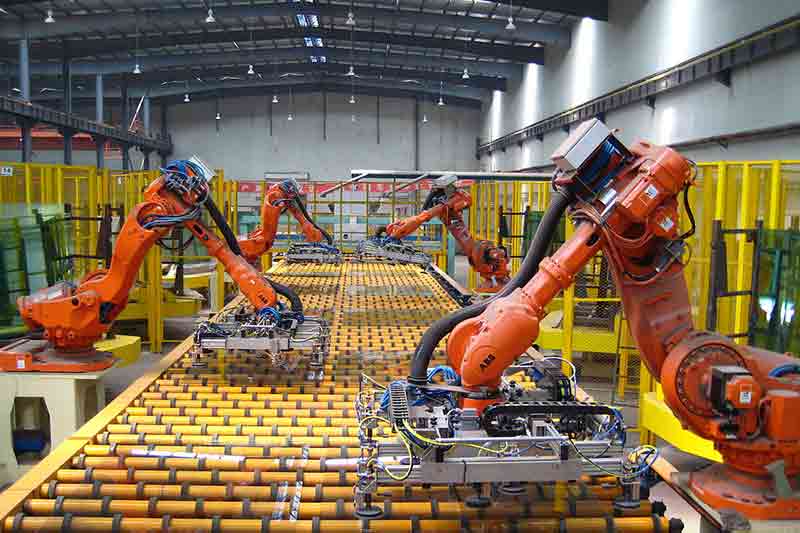
One of the main factors changing conventional industries is automation. Robotic systems perform repeated operations in production with reliable accuracy. This lowers manufacturing mistakes and frees up human labour to concentrate on quality control, supervision, and innovative problem-solving. Automated systems in finance analyse transactions and spot odd trends more quickly than human procedures ever could.
Another field that benefits from intelligent automation is healthcare training. Compared to paper-based systems, administrative systems are more effective in managing student data, certification tracking, and course scheduling. Smart feedback devices that evaluate compression depth and rhythm during CPR practice are now available for programmes like Newcastle CPR Training. It was challenging to improve technique with only observation, but this data-driven feedback helps students achieve quantifiable improvements.
Better Decisions Are Being Driven By Data
Decision-making in many businesses is being subtly changed by data collection and analysis. Retailers use consumer behaviour analysis to control inventories. Tracking delivery routes helps logistics organisations use less gasoline. In order to optimise distribution, energy suppliers keep an eye on usage trends. Instead of waiting for issues to materialise, these insights enable organisations to react swiftly to trends.
Data is also being used by training and education providers to improve the efficacy of their courses. Instructors may analyse performance data from exams and simulations in a first aid and CPR course Newcastle. This enables them to modify their teaching methods, pinpoint typical difficulties faced by students, and enhance results. Data gives skill development quantifiable clarity rather than depending just on custom or routine.
The Growth Of Remote Technology In Access
Remote technologies are the source of another subtle change. Cloud platforms, mobile applications, and video conferencing have made it possible for companies to function remotely. Companies oversee staff located in different locations and time zones. Consultations are provided by service providers without the need for travel. Many sectors are now more accessible and flexible as a result of this change.
This development has also been welcomed by training organisations. Online delivery of health and safety programme theoretical components enables students to finish their preparation at home before attending hands-on training. This hybrid approach has made it easier for parents, working professionals, and students with hectic schedules to attend programmes like first aid courses in Newcastle.
A Silent But Effective Development
The most significant aspect of developing technologies is that their impact often increases gradually. Although companies may not see a significant shift right away, industries are changing over time as a result of increased productivity, better data, more safety, and easier access to training. Though they function in increasingly intelligent and interconnected ways, traditional sectors are still identifiable.
This subtle development demonstrates that advancement does not necessarily come with a commotion. The most significant changes may take place quietly in the background, gradually enhancing processes and enabling individuals to carry out their responsibilities more successfully.